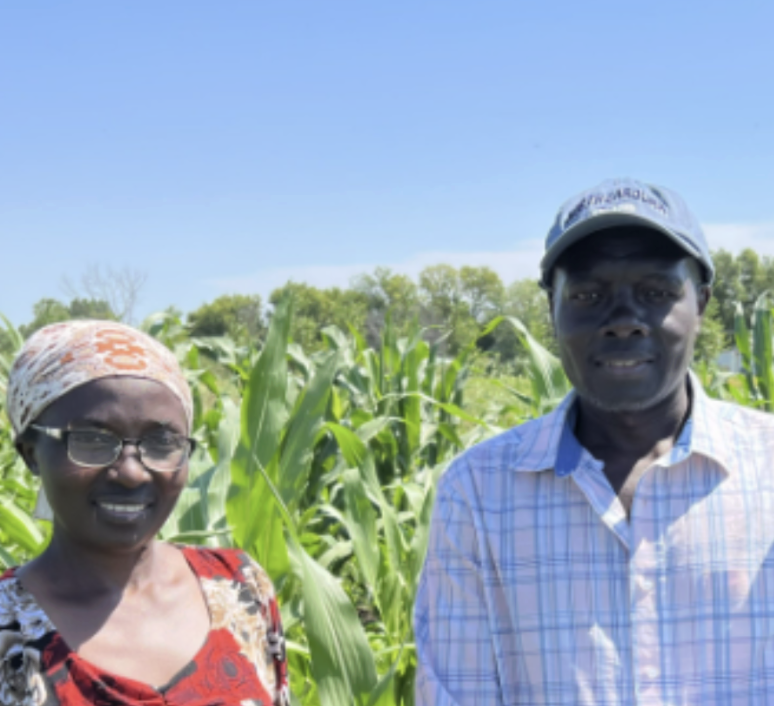
Why Buy Local? Meet Zipporah and Jairus.
For Jairus Momanyi and Zipporah Gitamo, “Farming clears mind fog, nourishes yourself, and feeds your community. It is sustenance”. Jairus and Zipporah are devoted farmers, and owners of Ramsey Micro Enterprise Farm, committed to providing community with mixed vegetables that are organic, nutrient-dense, and culturally-meaningful.
When you buy from Ramsey Micro Enterprise Farm, you are supporting a local farm that sustains affordable access to healthy and culturally meaningful foods.
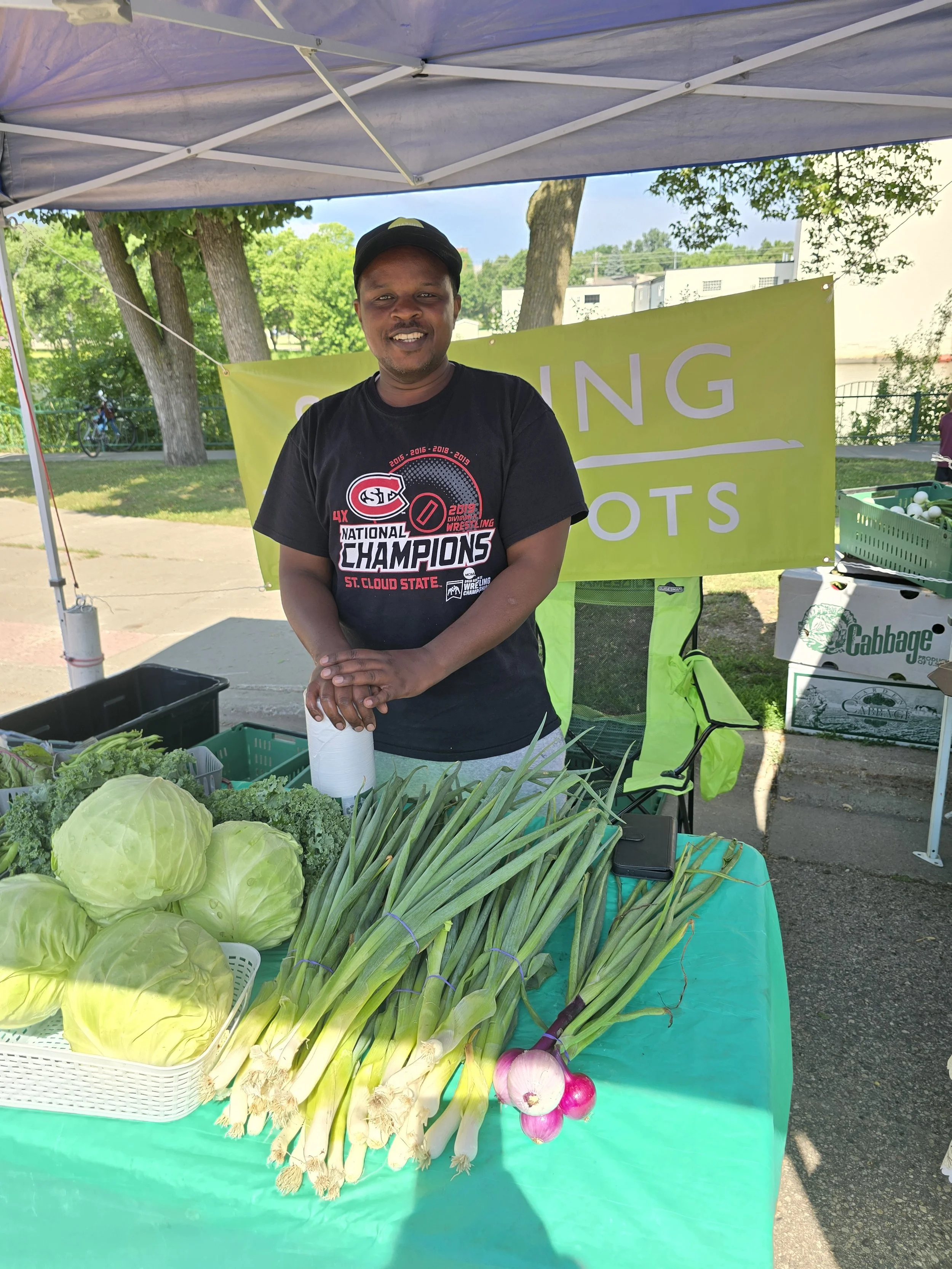
Nourishment & Belonging Cultivated at Moffado Farm
Moffat Otwere operates Moffado farm, located at Sharing Our Roots. His organic mixed vegetable production is a vibrant business that offers nutrient-dense and delicious produce— such as collards, beets, cabbage, okra, eggplant, cilantro, and green beans! At its core, Moffado Farm is committed to meeting the needs of the local community and dedicated to learning how to improve each season.
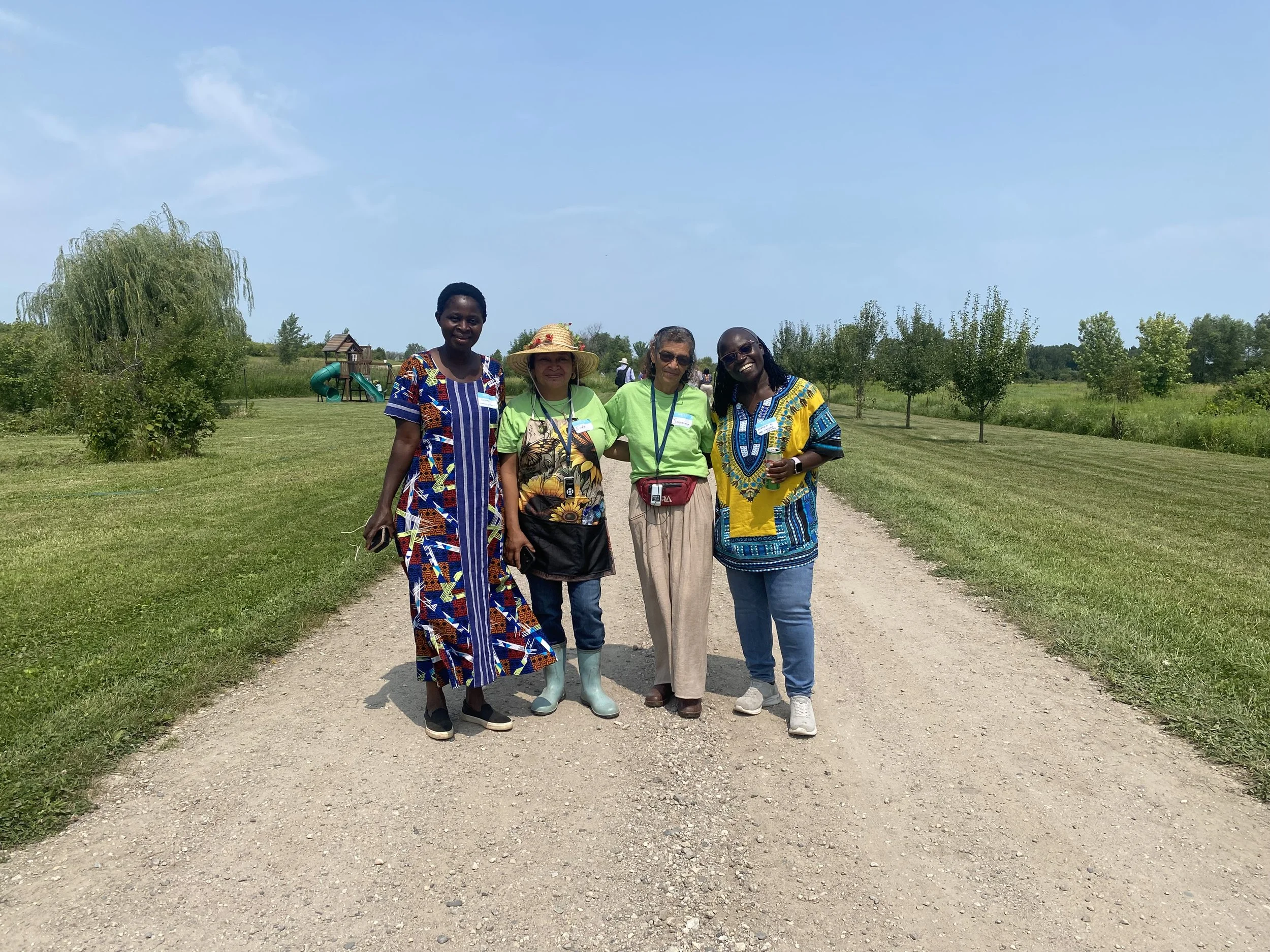
Lessons from the Field— Reciprocity, Determination & Interdependence
Moments to share our work and uplift our farmers are always so valuable. This month, we hosted a field day in partnership with Marbleseed, an opportunity awarded to us as part of being named Marbleseed’s Changemaker of the Year. We joined with 70+ farmers, agricultural professionals, funders, and supporters to discuss community-based farming and regenerative agriculture.
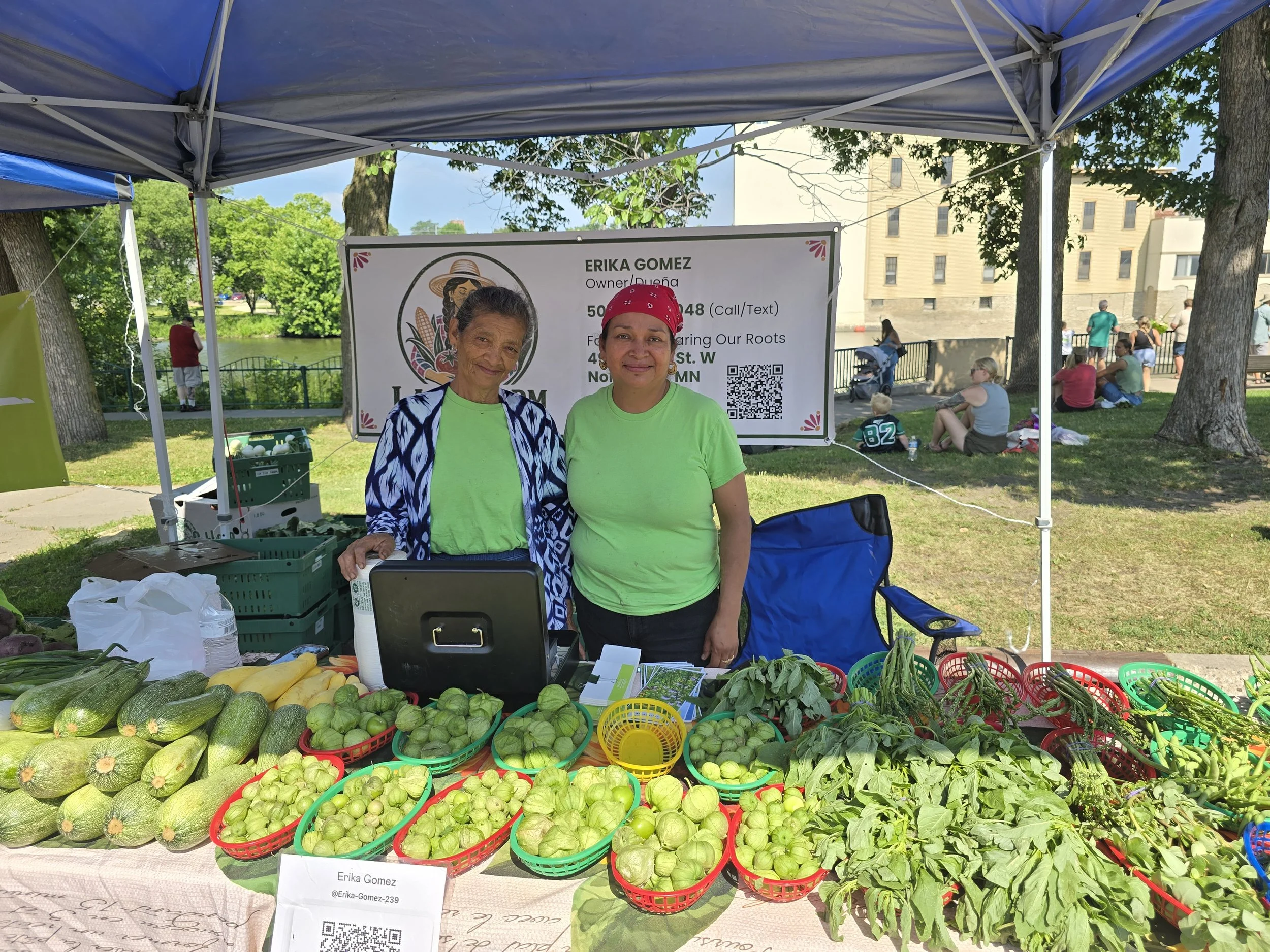
The Blossoming of La Tía Farm
This month, La Tía Farm is partnering with Grapeful Wine Bar in Owatonna– swing by and enjoy local, organic, and delicious dishes now until August 31st!
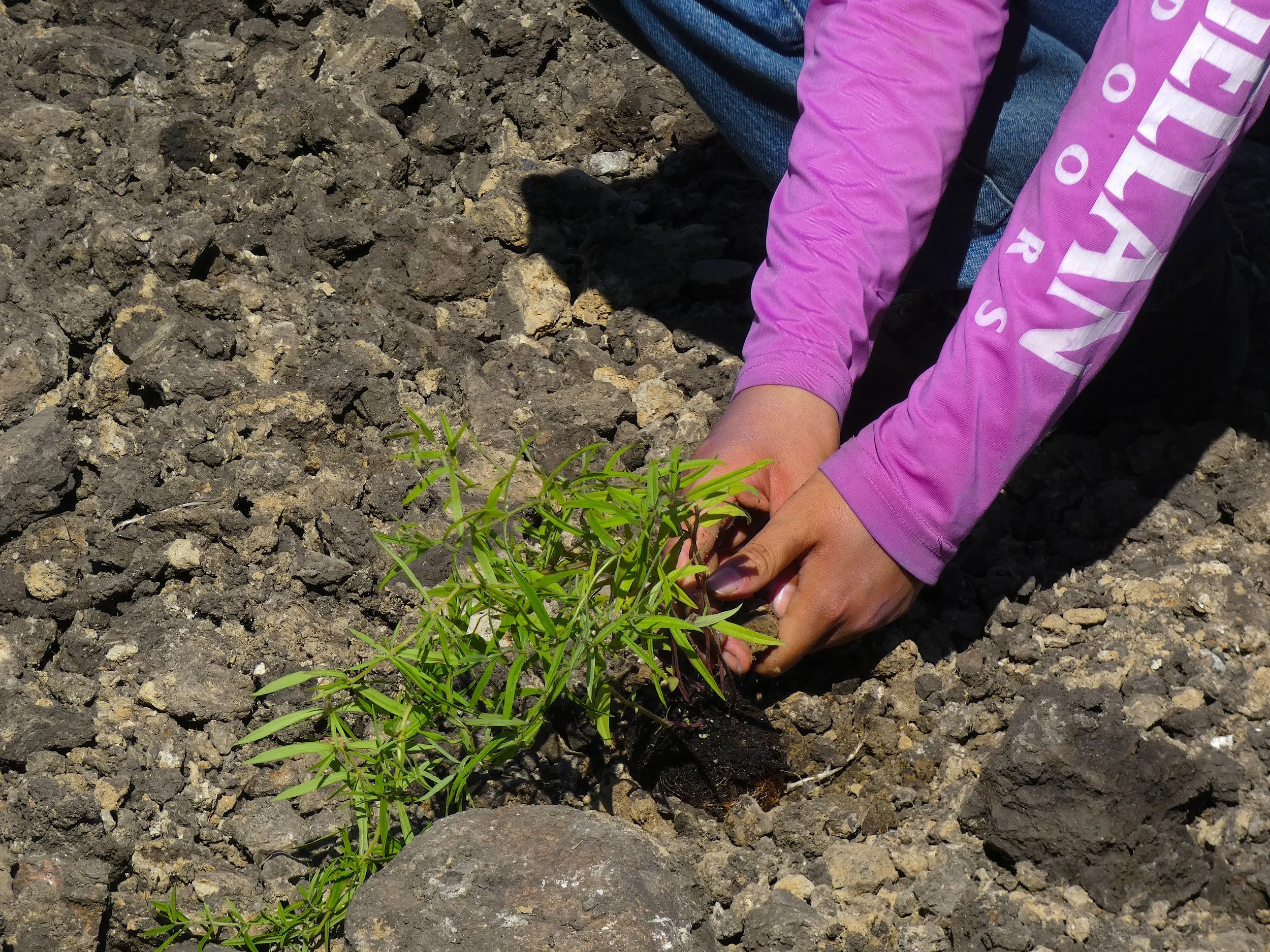
Seed Garden Volunteer Day
The heat wave didn’t stop us from getting out in the sun and planting a garden! We congregated with a big group of about 15 volunteers in order to transplant our bounty of plugs front of our packshed. Despite the sweat and the muggy air, we happily spent the morning planting a bunch of new species in our seed garden.
Sustaining Resiliency: Healing Community After Crisis
The beginning of 2026 came and went in a haze of pain, shock, and complete outrage. Operation Metro Surge disrupted months of work. Our community was scared and we did everything we could to mitigate the stress. Between establishing our community relief fund to hosting solidarity singalongs to coordinating outreach, Sharing Our Roots pivoted to meet the local need.
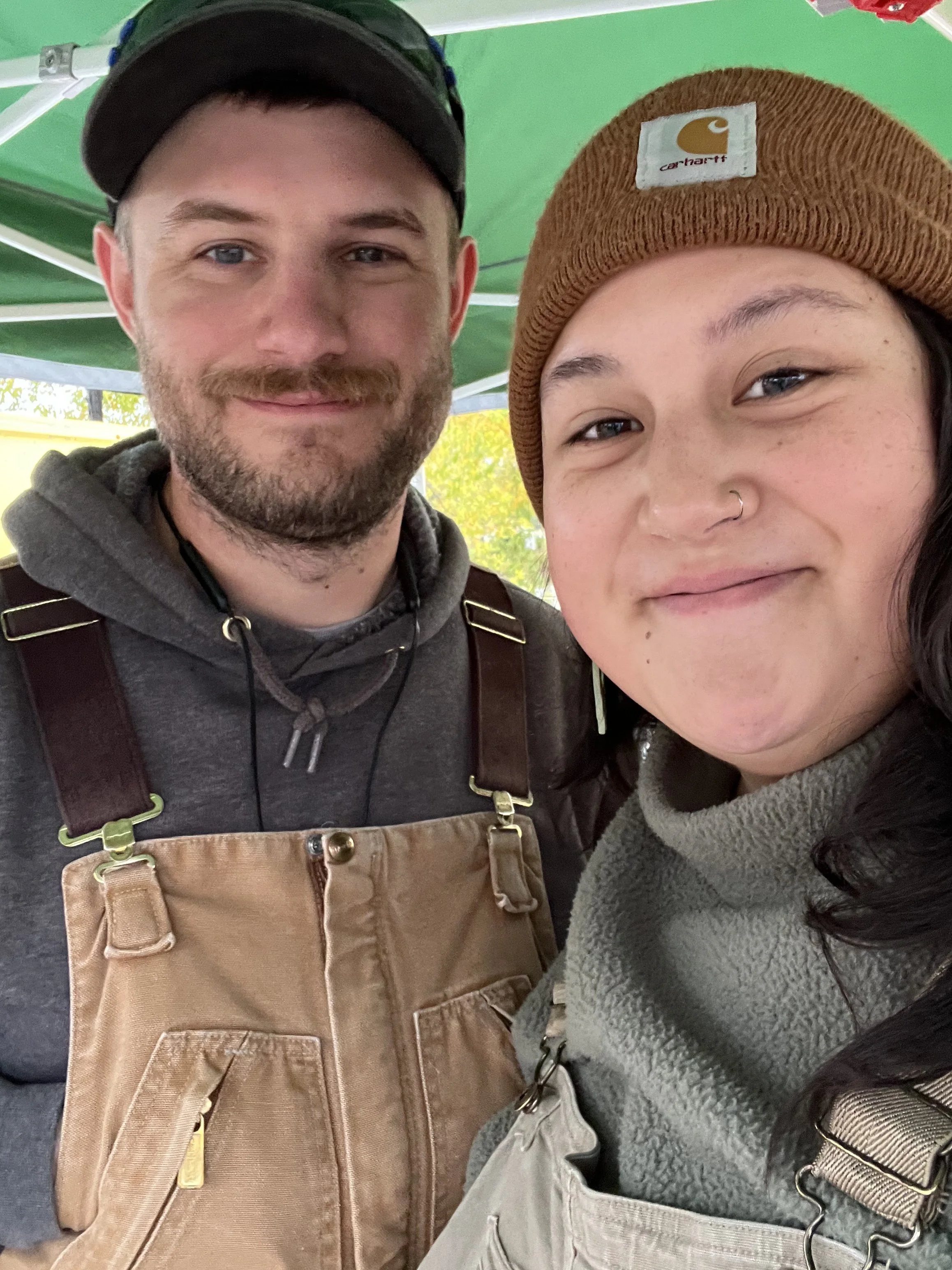
First Generation Farmers Taking Root Across Minnesota
W.T. farm is owned and operated by Wyatt and Tessa Parks, first generation organic farmers, dedicated to raising happy and healthy animals. Established in 2021, W.T Farms operated as a direct to consumer beef business that raises holsten steers from calf to butcher and is currently transitioning to a cow calf operation with British White Parks. Calves are sourced from local diaries and are raised on pasture year-round after weaning. The herd is reared to enjoy a full life, provided with local organic hay and a clean environment, free of chemical outputs. Although the animals are not certified organic, Wyatt and Tessa maintain them as if they were.
Community Plant Giveaway
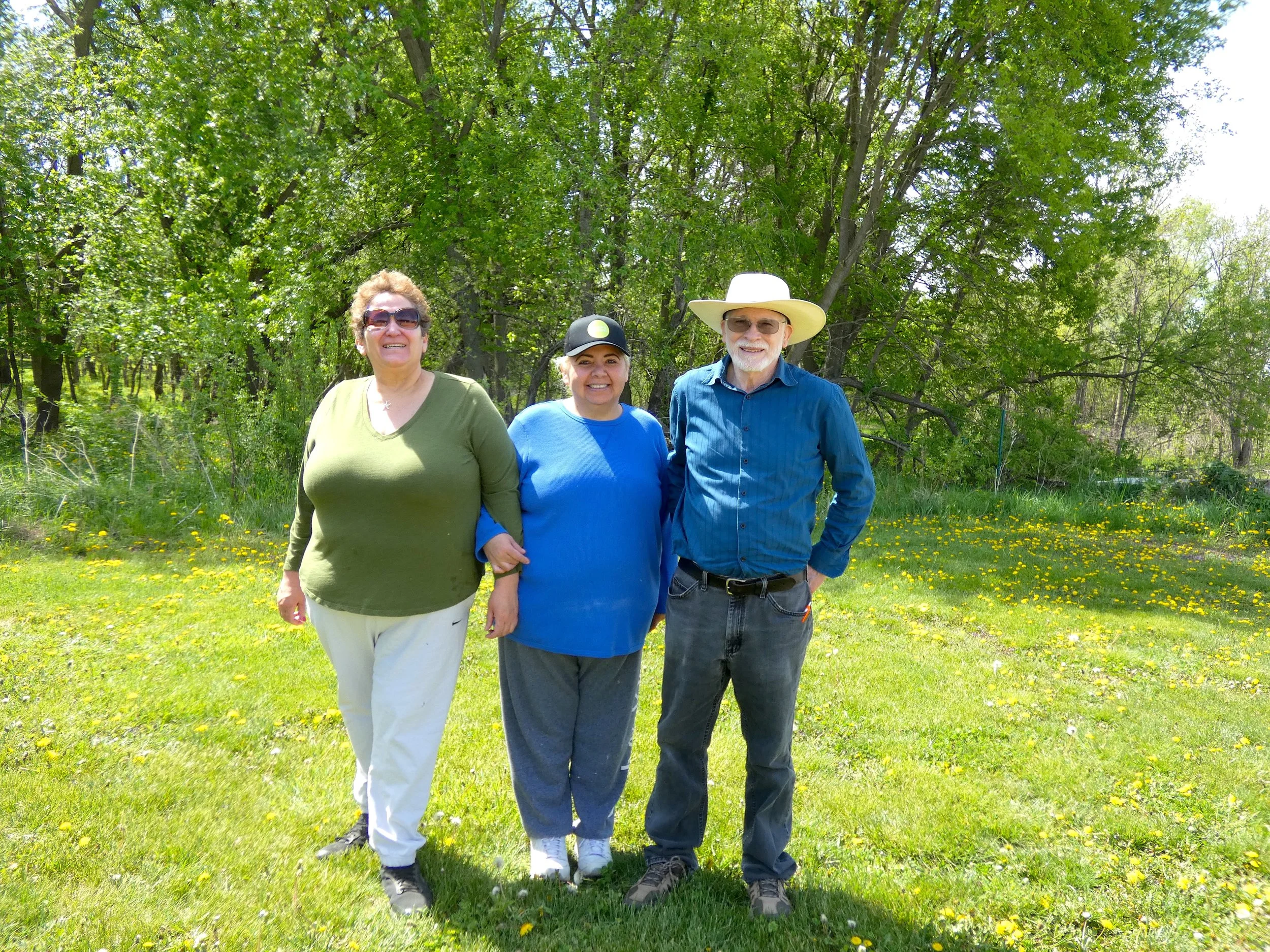
Our Community Connectors are always working hard to ensure our neighbors have opportunities to access gardens and grow their own plants. On May 14, we hosted a Community Plant Giveaway and invited all of our gardeners to pick up their orders of tomatoes, tomatillos, peppers, cucumbers, kale, cabbage, onions, and cilantro. Our volunteers were a big assist in keeping the day orderly and on-track! These moments of giving always resonate deeply with our commitment to build local food sovereignty; we are dedicated to empowering sustainable and organic food production in our community.
Empowering Emerging Farm Businesses: Food Safety & Market Access Training
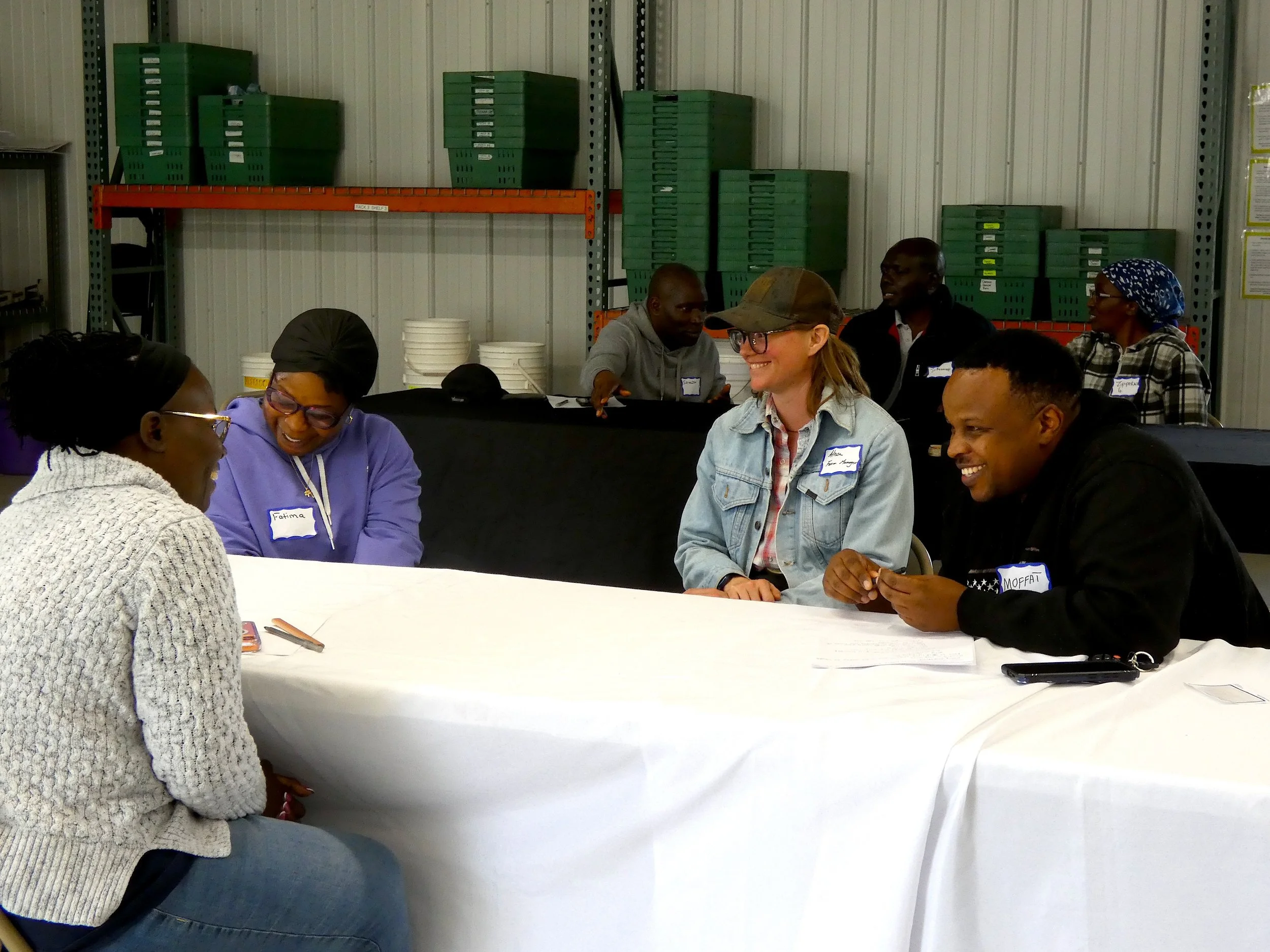
Our commons-based land access model is rooted in our commitment to link our farmer cohort to resources to grow their own farm business. Hands-on trainings by experts is key to preparing emerging farmers for success. This month, we hosted a training in collaboration with Marbleseed and University of Minnesota Extension in order to provide a robust lesson-plan and interpretation services. A group of our farmers attended to learn about food safety protocols and market access pathways.
What’s the deal with biochar?
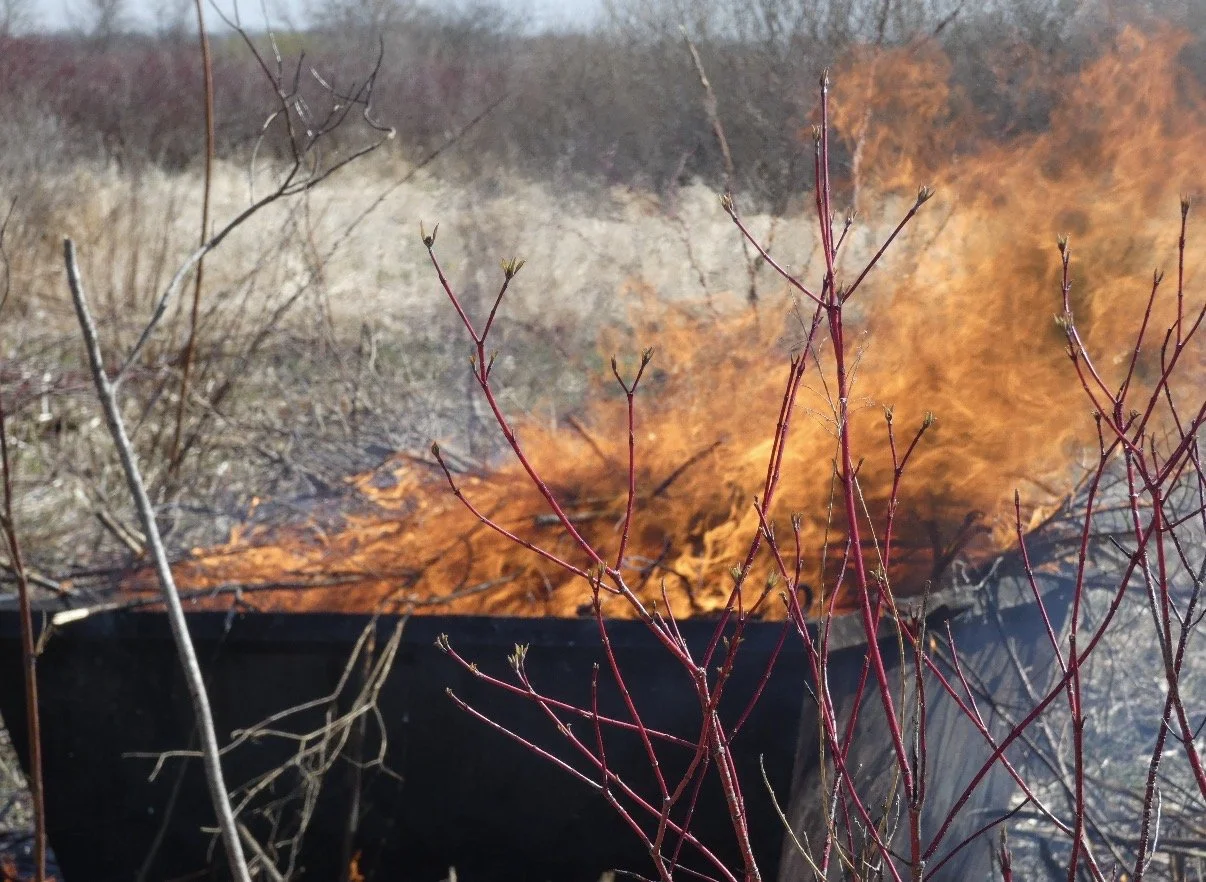
We believe in building resilient ecosystems and part of how we do that is through biochar production. Biochar is a valuable carbon-rich (50-90% carbon) charcoal that made by burning organic material. There are profound environmental benefits that include restoring soil health and mitigating climate change. Our Natural Lands manager, Nic Nelson, is introducing this process on the farm and educating others on how to use this restorative technique.
Carl Spring Break: Exploring the Agricultural Commons
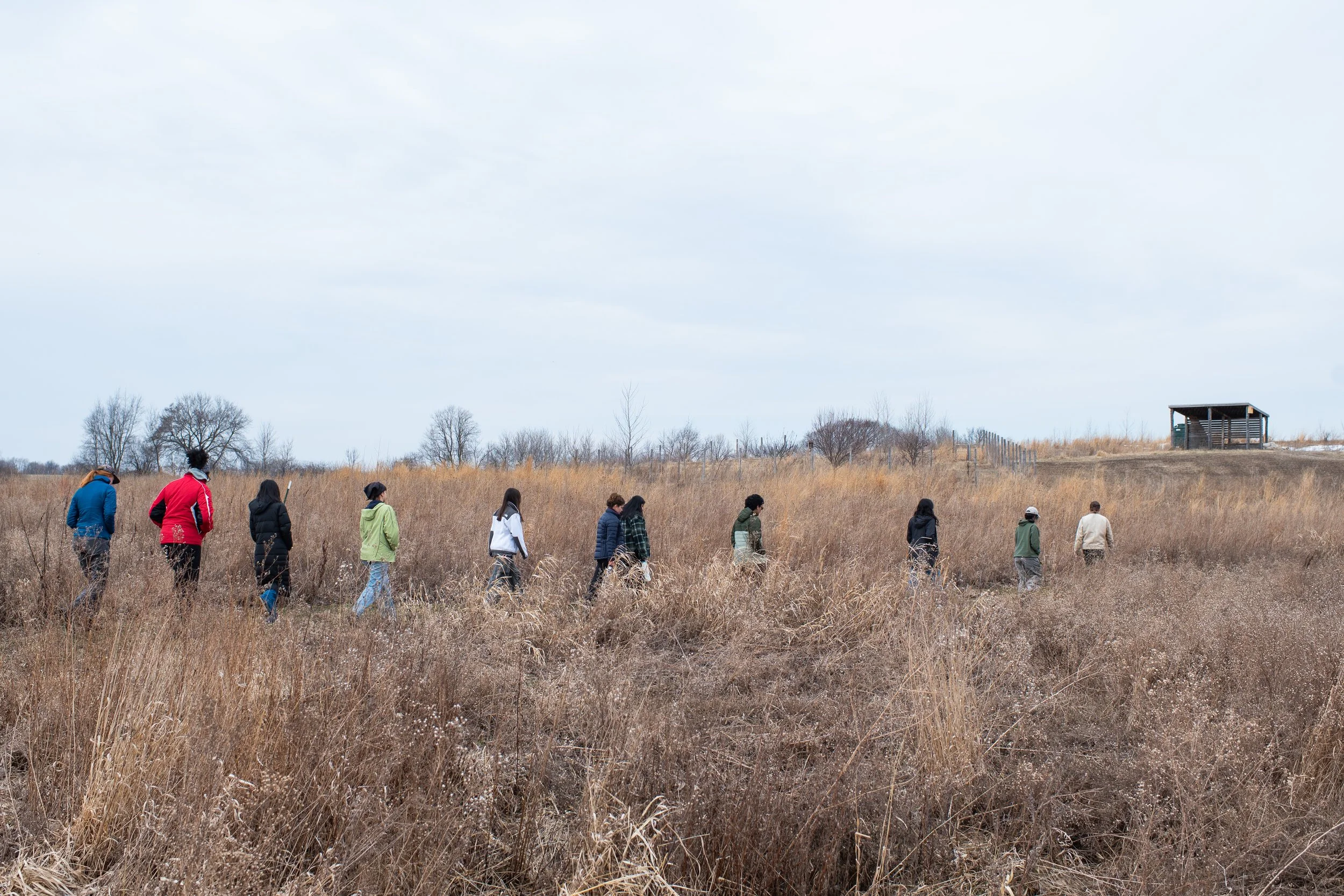
On March 24th and 25th, Sharing Our Roots welcomed 11 Carleton students to our farm and community gardens as a host site for an alternative spring break. Students interested in regenerative agriculture, community-based farming, and food sovereignty signed up to come out and see these processes in action! Students participated in a myriad of projects that demonstrated how our community farm and gardens are sustained: from seeding to pruning to fence maintenance to updating signage.
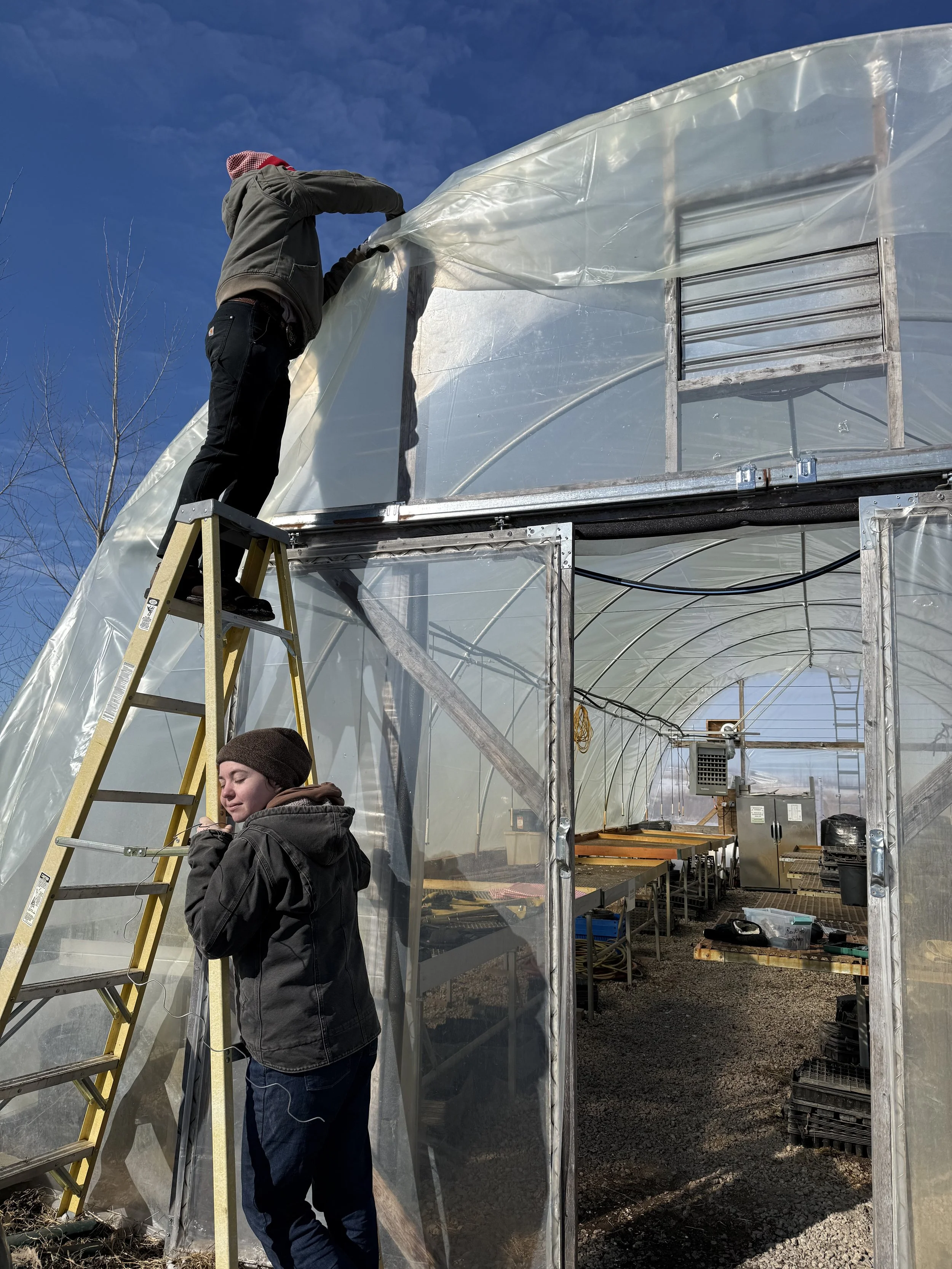
Harnessing the Light ☀️
The spring equinox is here and the growing season is upon us! At Sharing Our Roots, our greenhouse is key to extending the growing season and protecting against extreme weather. Every couple of years, the plastic needs to be replaced due to sun and weather damage. Alissa and Nicole tackled this project with smiles on their faces, happy to spend time soaking up the sun and improving infrastructure for our farmer cohort.
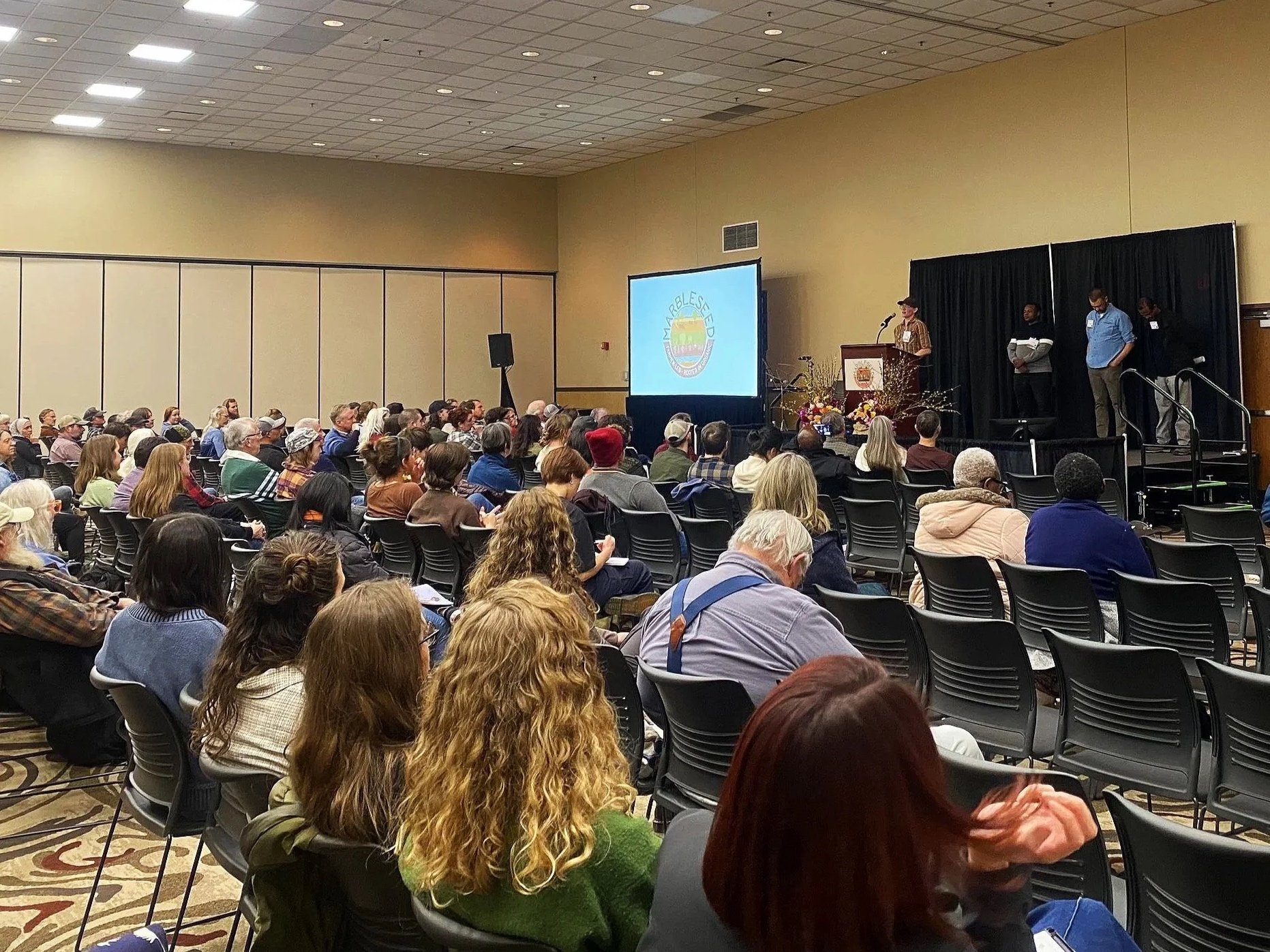
Becoming Changemakers
We model community-based farming rooted in organic and regenerative practices; our impact captured the attention of Marbleseed, a nationally recognized leader in the organic farming movement, and they awarded us the Changemaker of the Year Award. Our farmer cohort is composed of 11 farm teams, representing 40 families, and led by farm manager Alissa Jacobsen. In the past year, Sharing Our Roots has elevated our farm program to strengthen livelihoods, expand market reach, and build business skills. In this moment of recognition and celebration of our cohort, our spirits filled renewed hope that our impact is not only appreciated, but inspiring others to join us in transforming our food system.
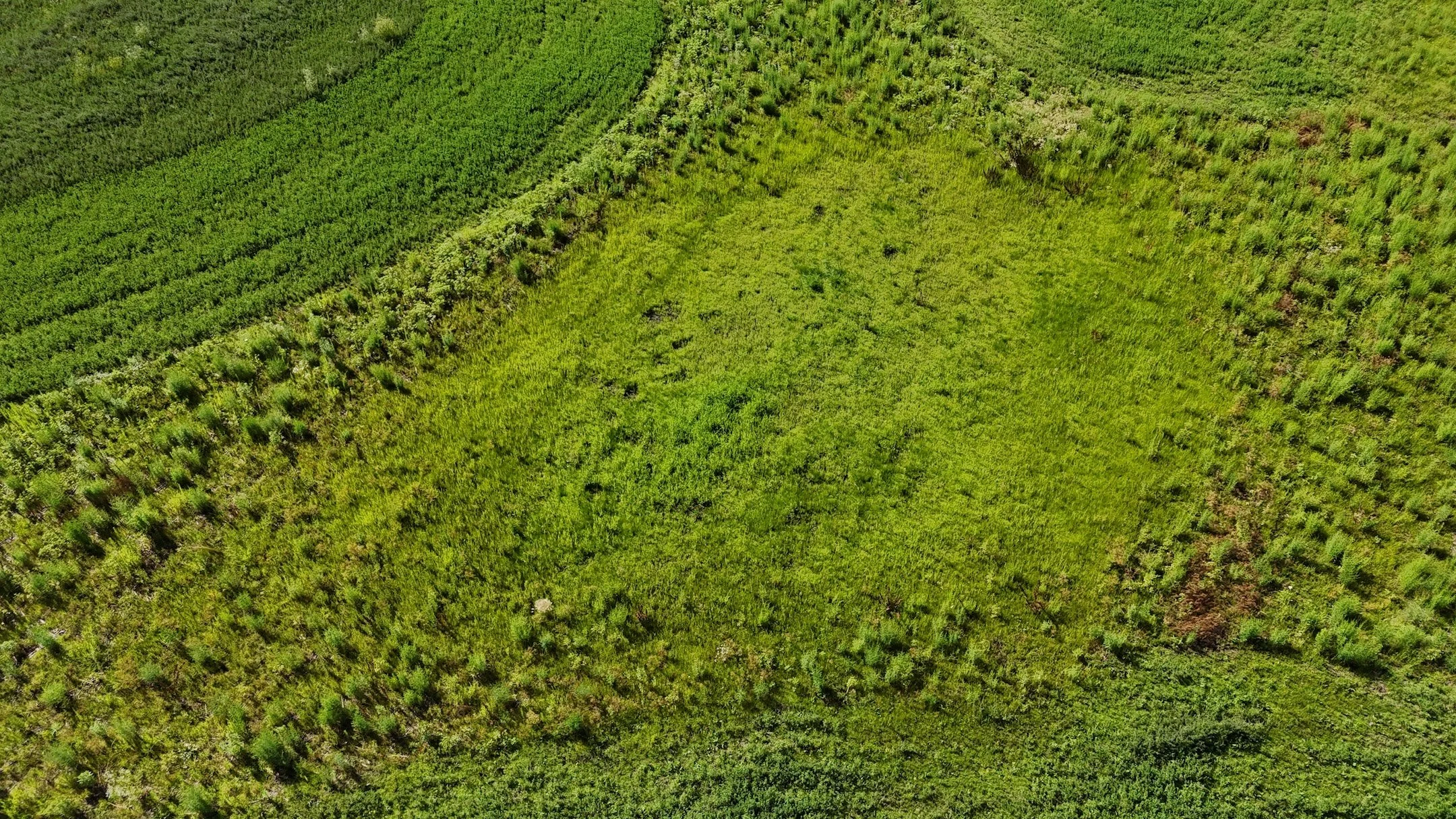
Sharing Our Fen
Imagine our surprise when we discovered that in the back 11 acres a severely-degraded fen was still showing signs of life! Since Sharing Our Roots began stewarding the land, we immediately stopped conventional practices of mono-cropping, spraying chemicals, and suppressing native plant life. As a result, native species began to repopulate the wetland and our Natural Lands manager, Nic Nelson, now has an incredible opportunity to lead the restoration of this rare ecosystem.

Restoring the Land With Fire 🔥
Fire can be heartbreakingly destructive, but it can also be a powerful tool when used carefully—as Indigenous people have known for thousands of years. Here at the Sharing Our Roots Farm, we’ve been using fire as a tool to help manage our prairies and wetlands since 2021.
We recently wrapped up our spring prescribed-burn season, which was our most successful one yet! We safely burned more than 20 acres of land over two days in May, with the help of many volunteers.

Celebrating Margaret’s Year of Service
This month, we are celebrating Margaret Anderson, whose Campus Compact AmeriCorps VISTA service term ended at the end of July. Margaret started with Sharing Our Roots in August 2023 and in just a year, did tremendous capacity-building work, including supporting dozens of community volunteers and Carleton College students in spending regular time at the farm.
The Campus Compact AmeriCorps VISTA position is part of a three year commitment between Sharing Our Roots and Carleton College’s Center for Community and Civic Engagement (CCCE). Each year of the program provides an opportunity for an Americorps VISTA to complete a year of service focused on the programming expansion and improvement of organizations centered on anti-poverty work.

Growing Local Food Networks
Beginning and emerging farmers — especially those who don’t inherit a family farm – face an evergreen challenge: finding a market for their harvest. Local and metro area farmers markets are a popular choice but have an upfront setup cost, weekly time commitments, and no guarantee of selling all crops during a bumper week.
Wholesale, the typical route of larger farmers, may be far more attractive, with contracted rates and guaranteed sales. However, those contracts are generally only available to growers with a proven track record for harvesting large yields of a particular, standard crop; there is no flexibility for unforeseen crop loss or damage. Thus, wholesale contracts can be initially out of reach.

Growing Connections
As part of our mission of nourishing community, our Community Connectors initiative supports 154 local, low-income families grow healthy, fresh produce in 7 community gardens across Rice County, including a large garden at the Sharing Our Roots Farm.
These gardens provide space to grow culturally-significant crops that may be difficult to find commercially, but land access is just the beginning. Community gardens also provide vibrant social spaces for neighbors, many of whom are recent immigrants. “Our gardeners come from different cultures, different countries, and speak different languages,” says Antonio Alba-Meraz, Community Connector Program Manager, “the gardens are a form of support, where cross-cultural relationships are the glue.”

Farmer Highlight: Canaan Greens Farm
Esther Ondeiki and her family have been working with Sharing Our Roots as vegetable farmers since 2021.
In this interview, Esther shares her experience as an organic farmer in Sharing our Roots. We discuss her journey finding the farm, the differences between farming in Kenya, her home country, versus in the U.S, and how Sharing Our Roots has aided in that transition and supported her family.
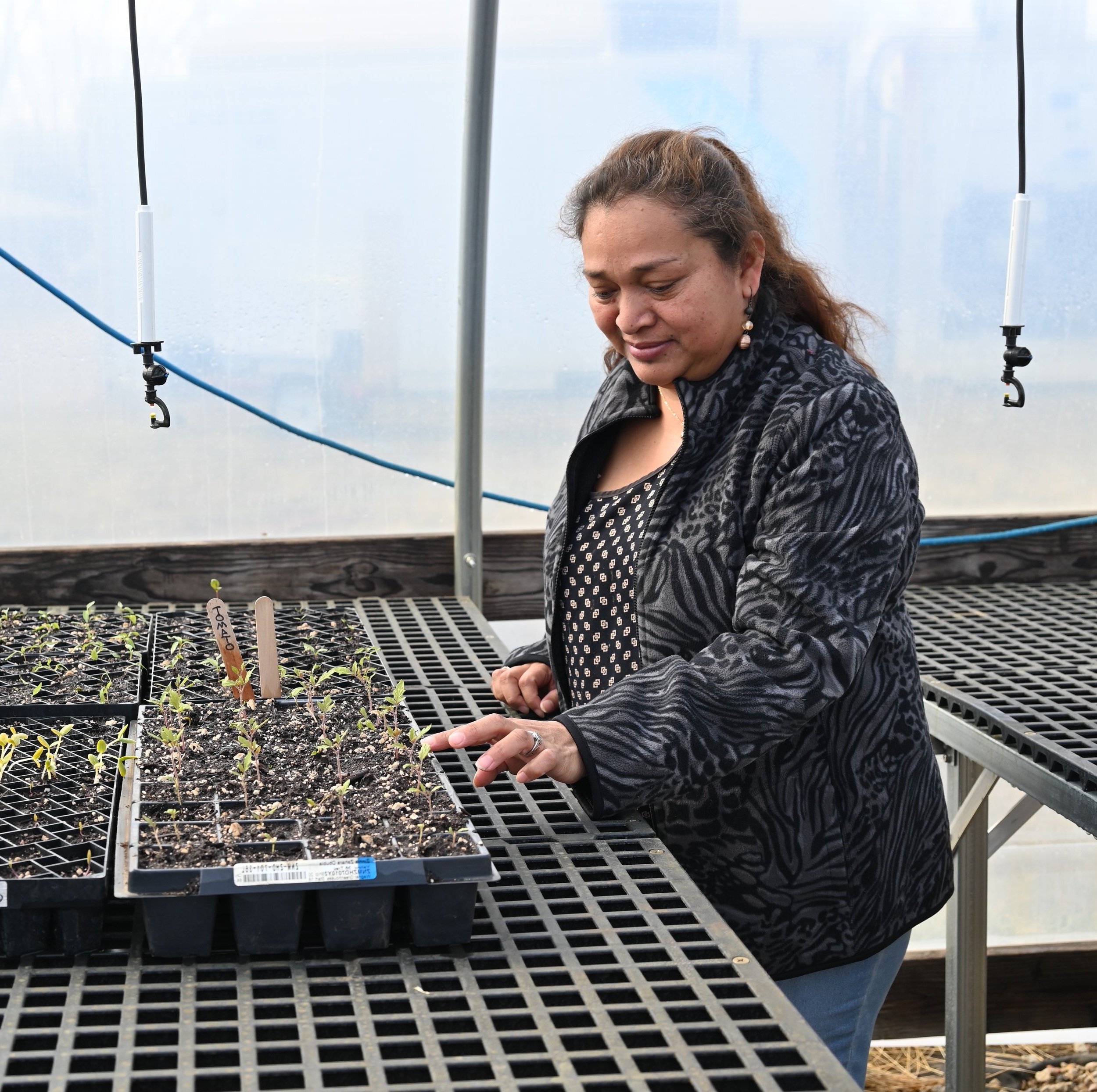
Supporting Farmers Directly
Sharing Our Roots provides a wide array of farming infrastructure, equipment, and facilities for our Commons Cohort farmers, but custom needs for each farm operation vary. To help cover gaps, Sharing Our Roots is providing direct support in the form of microgrants to Cohort farmers.
Farmers are eligible for up to $1,000 per farm operation annually, freely given. Farm teams are asked to submit a simple application that outlines how the funds will be used and what impact it will have on their ability to successfully farm.